
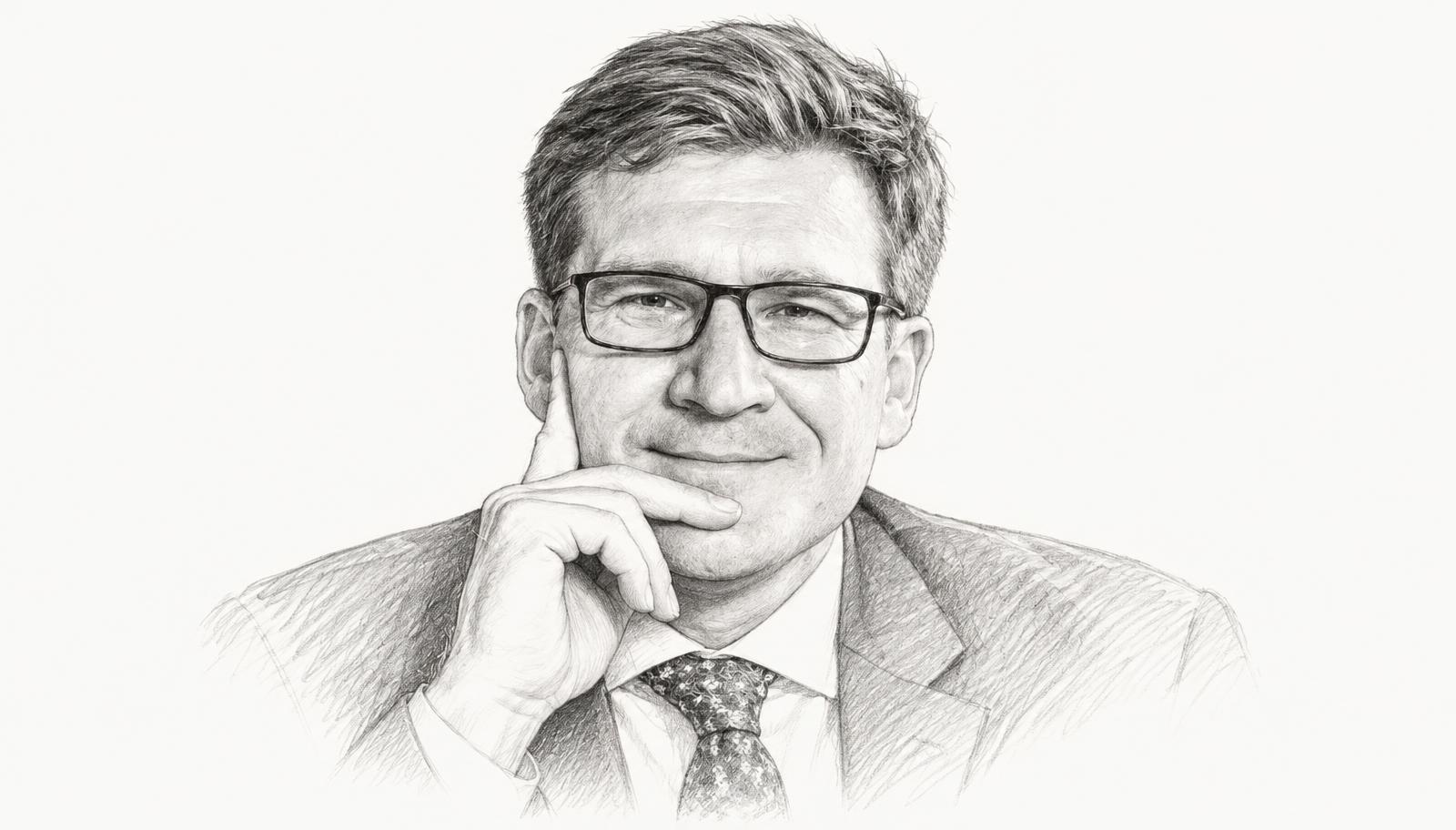
Key facts
- Who is Dr. Marcin Piątkowski? Professor of Economics at Kozminski University in Warsaw, former Senior Economist at the World Bank specializing in private sector development across markets including India and China.
- Promoter of Poland's Economic Success: Author of dozens of academic publications, including Europe’s Growth Champion: Insights from the Economic Rise of Poland, published by Oxford University Press in 2018 and 2025 (Polish edition: Złoty wiek. Jak Polska została europejskim liderem wzrostu i jaka czeka ją przyszłość [Golden Age: How Poland Became a European Growth Leader and What Its Future Holds] by Prześwity, 2023).
- The Polish Development Model: In Piątkowski’s view, Poland has developed an economic expansion model that is far easier for developing nations to implement than the South Korean model.
- The Golden Age Movement: A national mobilization initiative transcending political, social, and cultural divides, designed to position Poland as a European and global leader for the first time in history.
Michał Karbowiak: What did people in Poland say when you first started talking about a Polish "golden age" over fifteen years ago?
Dr. Marcin Piątkowski: They tapped their foreheads. People found it hard to believe that Poland was leading economic growth in Europe and globally, or that we were living through a true golden age.
That was back in 2009, right in the middle of the global financial crisis. America was tumbling, the Eurozone was slipping into recession, and there I was in an interview saying we were living in the single best moment in our history. After playing the role of an economic underachiever for a thousand years, Poland became a growth superstar - and achieved it in a beautiful, inclusive way.
Not the best timing.
At first, convincing anyone was an uphill battle - both outside Poland and, even more so, at home. But it pays to systematically present the evidence, to travel across the country and the world. After more than 15 years, this Polish "golden age" feels obvious to many. Do you remember the cover of The Economist from May 2025?
"The remarkable rise of Poland, Poland, Poland, Poland." I keep it right on the homepage of Polish Tech Minds.
It didn't come out of nowhere. Journalists at The Economist had read my book, Europe’s Growth Champion: Insights from the Economic Rise of Poland. We had been in contact over the years, so the decision to cover Poland wasn't accidental. Many people contributed to that moment, but I played a part too.
To this day, journalists from all over the world call me wanting to understand Poland. That’s a good thing, because we have a much bigger story to tell than just growth in GDP per capita. The world could genuinely look to us as a model!
Inspiration for 6 Billion People?
Aren't you exaggerating?
I don't think so. Poland boasts a unique model for growth and wealth accumulation. We succeeded without a dictatorship, without natural resource reserves, without debt-fueled steroids - even if our public debt has been rising recently - without an oligarchy, and without high income inequality.
We have a balanced economy: our current account deficit is close to zero, and we face no threat of financial catastrophe. We aren't a one-product economy - no single product accounts for more than 5 percent of our total exports. And our quality of life and sense of happiness are higher than in most countries at our level of development.
Why should the rest of the world care?
They care increasingly, because Poland can serve as a blueprint and inspiration for 6 billion people currently living in poverty or in countries stuck in neutral. Do you think they don't want to get wealthier? To live better? Of course they do! So they look to countries like South Korea - one of the Asian Tigers. Yet the Polish model is just as economically efficient as the South Korean one, while having been achieved at a far lower social cost. It is also significantly easier to implement in other developing nations.
Could you explain why?
The South Korean model relied on protectionism, subsidies, corruption (five out of nine South Korean presidents following democratization ended up in prison or under criminal indictment), authoritarian control (at least through the late 1980s), and an exceptionally high-performing public sector. That last requirement is well out of reach for most developing nations. The rest would be hard to recommend to anyone today.
Furthermore, it was built on a devalued currency, high savings rates, and extracting every last drop of effort from workers. We see magnificent Korean brands like LG or Hyundai, but that economy has another side to it.
Which side?
The side of domestic-facing companies that the world never sees, which perform significantly worse. That's why average labor productivity in Poland and South Korea is surprisingly similar - a fact that often shocks people. For every hyper-efficient Samsung, there is a very low-productivity domestic business.
Our path was completely different from South Korea's: liberal, globally connected, open to trade, foreign investment, and technology absorption. Poland invested heavily in education, workforce skills, and infrastructure. We didn't manipulate our currency exchange rates, nor did we resort to protectionism or industrial subsidies. And, as I said, that growth came at a much lower social cost.
So it was ideal...
No nation develops flawlessly. Poland has its share of problems too...
No to Enlightened AI Oligarchs
Before we get into those problems, let's stay on the global stage. Might it be better if the world - especially today - learned from a thousand years of Polish failures instead?
Now you've piqued my interest. Why do you say that?
In Złoty wiek. Jak Polska została europejskim liderem wzrostu i jaka czeka ją przyszłość [Golden Age: How Poland Became a European Growth Leader and What Its Future Holds], you argue that our country failed to reach its potential for centuries because it operated as an oligarchy: governance by the few for the benefit of the few. Don't you see an analogy in how global artificial intelligence is developing?
That’s a fascinating hypothesis - original and non-obvious. Every oligarchy is bad. It would be disastrous if we transitioned from domestic oligarchies to a global oligarchy where a handful of guys tell us what to do, or even what to think. That is a clear and visible threat. One oligarch controls X (formerly Twitter), another owns one of the most prominent American newspapers, another controls Facebook and Instagram... Add to that a small cluster of companies that seems to dominate AI development. On one side, we have Western enlightened AI oligarchs, and on the other, quiet Chinese oligarchs behind TikTok.
You note that transitions from oligarchy to an inclusive system - where "many govern for the good of many" - are usually preceded by tragedy: massive epidemics, wars, or brutal regimes that erase the existing order so something new can be built. Should we expect the same pattern with AI?
I wouldn't say tragedy is inevitable. All is not lost. We are talking about companies - mostly relatively young ones - not nation-states where social and political structures crystallized over centuries. These corporations operate largely within established, democratic legal frameworks. We know how to regulate within those bounds.
Once upon a time, powerful telecom operators claimed it was impossible to transfer a mobile phone number to another network. Today, we do it instantly. I see no reason why our accumulated data on one platform shouldn't be freely portable elsewhere. And AI models can be subjected to stronger government oversight.
You also see AI as a driver to boost labor productivity - a potential lifeline for aging societies like Poland's.
At the macro level, we don't see AI driving labor productivity growth just yet. What we do see are massive investments in data centers, which are necessary to sustain AI development. There is immense momentum here - despite what President Donald Trump is doing in the Persian Gulf, despite high energy prices, and despite senseless tariffs. Virtually half of recent US economic growth is tied to the investment wave sparked by the arrival of ChatGPT and related solutions.
What are economists forecasting regarding potential labor productivity gains from AI?
There's a wide spectrum of views, starting with cautious predictions from Daron Acemoglu - who, alongside Simon Johnson and James A. Robinson, won the 2024 Nobel Prize in Economics for research into how institutions form and drive prosperity. Acemoglu estimated that over ten years, AI will raise US GDP by only 1 percent. On the other end, we have AI prophets claiming global economic output could expand by up to 30 percent annually thanks to AI.
What is your forecast?
I treat AI as a general-purpose technology - similar to the internet. If we learn to harness it properly, I would bet on an increase in global GDP growth of about half a percentage point per year. That would be an enormous acceleration. When it comes to AI, though, I have a different dream.
What's that?
I want AI to help find a cure for cancer and other diseases. We should redirect its capabilities toward that domain as quickly as possible. I know that’s far harder than solving math problems or writing software, because medicine is tied much more deeply to biology and physics. My dream is for AI to solve real human problems, rather than serving solely as a money-making engine.
My Cousin - AI Genius Łukasz Kaiser
What does your cousin Łukasz Kaiser - co-author of the seminal paper Attention Is All You Need, which laid the foundation for modern AI - say about artificial intelligence?
Thanks to that paper, he is, in my view, a potential Nobel laureate. I very much hope he wins it. As for his outlook on AI development, I'd prefer he speak to that himself. Generally speaking, I can tell you he sees immense potential in AI.
Łukasz meticulously tracks the progress of individual models, understands their technical nuances, and knows what capabilities they gain over time. To me - a layman - those versions are just changing interfaces on a computer screen.
It's remarkable that a former senior World Bank economist and a global AI pioneer come from the same family.
It's a nice coincidence, but I can say with pride that Łukasz is a co-creator of one of the most important technologies in human history. His path wasn't obvious: it led from Wrocław to Aachen, and ultimately to Silicon Valley - from research to building technology on a global scale. He didn't have to end up where he did.
I have met many brilliant Polish mathematicians and computer scientists who lacked the drive or motivation to leverage their genius fully. Łukasz is extraordinary in that regard. I have immense respect for him.
Is it a shame he isn't building AI solutions in Poland?
His story shows how difficult it would be to retain such talents in Poland. It’s like expecting Kylian Mbappé to leave Real Madrid for Legia Warsaw.
First, you would have to offer astronomical compensation just to get him to consider it. Second - and more importantly - moving a single superstar to Legia wouldn't magically transform the Polish league or the team itself. In football, as in business, it's not just about individuals. You need an ecosystem that maximizes what those geniuses can achieve while giving them room to grow. In that regard, Silicon Valley is hard to beat.
ElevenLabs - a global leader combining AI and voice tech - was built by two Poles, yet most of the tax revenue it generates goes to the US. How does a Polish economist look at that?
The Chinese have a saying: it doesn't matter if a cat is black or white, as long as it catches mice. Let's celebrate that Poles built a globally recognized company. Executives at major tech firms and premier venture capital funds talk about ElevenLabs as a Polish-founded success story. That is a historic milestone.
Recently, I was in Florianópolis - a Brazilian counterpart to Sopot - and after giving a lecture on Poland's economic success, I spotted ElevenLabs advertisements on the street. That is huge. Previously, if I saw Polish ads anywhere abroad, they were for apples or vodka. ElevenLabs represents a breakthrough.
A billboard is great, but one could argue Poland sees little direct return from that success.
We would love for ElevenLabs to be registered in Warsaw rather than Silicon Valley. But it's not that simple.
If I were running a tech startup, I would probably head to where access to capital, top talent, and deep networks is greatest. Brain drain and talent mobility aren't unique to Poland; the exact same thing happens in Germany or Spain.
However, the ElevenLabs case should inspire us to act. For instance, in Poland, transferring shares in a standard limited liability company still requires visiting a notary and waiting months for court registry updates. That is absurd. We have the security infrastructure, technical capabilities, and digital signatures via the mObywatel app to handle it entirely online and instantly. We have everything needed to eliminate another friction point for entrepreneurs and step into the forefront of European digitization. We won't become Silicon Valley overnight, but we can make a massive step forward.
The Golden Age Movement
Don't you have a startup of your own? It was recently announced that your foundation will receive backing from a new philanthropic fund, Future For Poland.
That’s right - the support goes to the Golden Age Movement, which I initiated. A few months ago, as perhaps the first Pole in history to do so, I voluntarily left the World Bank to return to Poland. I don't know anyone else who made a move like that. Most of my former colleagues stay until retirement. It’s prestigious, well-compensated, and stable work.
However, I came to the conclusion that there is so much to be done in Poland, Europe, and the world that I can be more effective and exert a far greater impact working outside the bank from Poland than staying inside it, even in markets like China or India.
What will the Golden Age Movement focus on?
The movement aims to unite people who believe in an ambitious vision for Poland's development. We operate on three pillars: media, community, and public impact. We want to promote Poland's economic success story and its development model nationally and globally, while also pushing policy changes to ensure this golden age continues and growth remains sustainable.
In what way?
To give a practical example: I have trips scheduled to 12 countries across four continents over the next six months. With support from Future For Poland, I want to maximize their impact - ensuring that the story of the Polish model reaches far beyond lecture halls to a global audience. I want to build a "dream team" that will demonstrate how the Polish growth model, while not perfect, is superior to the South Korean model in many respects, and share actionable knowledge on how to achieve it.
Beyond promoting Poland, we want to back strong ideas for our development. There's no shortage of them. We want Poland to double its spending on science; we want to build a brand-new university from scratch - say, a University of Emerging Technologies - that breaks into the global top 100 rankings. We want commercial courts to leverage AI to deliver rulings in 30 days instead of the current 360. These are initiatives that the vast majority of Poles could rally behind regardless of political affiliation. And that's the point.
We are also building a community. Numerous people have signed up through our website, and we want to mobilize them to collaborate. These local groups will discuss not just global trends, but the future of their municipalities, counties, voivodeships, and the country as a whole. We want everyone to feel they have a stake in the nation's trajectory, with the Golden Age Movement serving as a vehicle for that engagement.
Is this because, as you wrote in your book: "We lack a vision. We don't know where we are going, what we are striving for, or what kind of country we want for ourselves and our children"?
I stand by that completely. When I went on a high school trip to Germany in 1990, we used to say we were "going to Europe." The "return to Europe" - joining the EU, OECD, and NATO - was a shared goal for virtually all of society. It was the anchor for our structural reforms. Today, that grand vision is missing.
Poland Like Germany, Wałęsa Like Musk
What vision are you proposing?
I propose a vision of catching up with Germany and becoming one of Europe's top three leaders - alongside Germany and France - by 2040. It is fully achievable! If we maintain a 3 percent annual growth rate over the coming years while Germany grows at 1 percent, we can match their income level within a decade and a half, for the first time in history. I would love for this new vision - jokingly phrased as "catch and overtake Germany" - to energize all Polish economic policymakers (laughs).
In 1980, Lech Wałęsa - leader of Solidarity, later Nobel Peace Prize laureate and President of Poland - proposed turning Poland into a "second Japan."
Wałęsa was the prototype for Elon Musk. He would drop a bomb into public debate just to see what happened. Back then, his "second Japan" idea was at least as controversial and improbable as Musk's mission to Mars. Yet it actually happened! According to official IMF figures, Poland's per capita GDP adjusted for purchasing power surpassed Japan's level this year.
I'm not sure Poles feel like they are living in a second Japan, though.
There are other economic metrics where we haven't overtaken Japan - such as innovation capacity, capital depth, or household savings. But in terms of per capita GDP, we are higher. That illustrates the phenomenal progress we have made and the power of Wałęsa's vision. Regardless of whether it was completely serious or realistic at the time - it stuck in the public imagination.
What comes after Poland becomes a second Germany?
By 2050, I want us to become a second Denmark or Netherlands. Those are two European economies - and among the few globally - with per capita income levels exceeding the EU average by 20 percent. Outside the US, Singapore, and resource-rich nations like Norway or Qatar (which don't fit the Polish model), there are really only six benchmark economies in the world: Taiwan, Switzerland, Luxembourg, Ireland, the Netherlands, and Denmark. We won't become Switzerland; we won't - and shouldn't want to - become tax havens like Luxembourg or Ireland. In Europe, that leaves Denmark and the Netherlands, and globally, Taiwan. That is the trio we should learn from.
Concerns for Europe, Challenges for Poland
In your book, you suggested that given the high cost of setting up factories in the US, Taiwan's semiconductor giant TSMC should be invited to invest "in our safe, trusted, and politically aligned region." The government recently announced a major cluster of Taiwanese semiconductor firms setting up in Lower Silesia. Are Polish politicians listening to Marcin Piątkowski?
I don't know if that's the case in this specific instance. I’d say they occasionally hear what I'm arguing. I do know that President Karol Nawrocki, Prime Minister Donald Tusk, and Foreign Minister Radosław Sikorski have read my book. That's genuinely gratifying. I also notice a shift in their narratives. Three years ago, Prime Minister Tusk was criticized for lacking a vision and sticking to a cautious, ‘hot water in the taps’ approach focused on maintaining the status quo, but his tone has grown bolder. He now says we can afford to become the third-largest economy in Europe, that we must invest and push forward. President Nawrocki emphasizes that Poland is living through its greatest era. I see echoes of my work in those statements.
My job as a participant in public debate is to highlight how much we have accomplished, while convincing leadership that we are capable of achieving far more.
Let's return to Poland's vulnerabilities. You acknowledged earlier that things aren't perfect.
Nowhere is perfect. A golden age isn't nirvana. We cannot allow Poland to become the Icarus of Europe - flying high only to crash down. World economic history has seen such cases. In 2007, Spain reached nearly 105 percent of average EU per capita income; today it sits at 92 percent. I worry that without structural reforms, our momentum will stall. We could become a Spain, minus the sunshine. It's like riding a bicycle: it’s far easier to maintain momentum than to regain speed once you stop.
In Golden Age, you frame the core global and domestic challenges as the "5 Ps."
I analyze the rise of populism and geopolitical friction. I focus heavily on an aging and shrinking population. I stress the urgency of environmental protection and climate action. I warn against plutocracy - rising inequality and the concentration of power among narrow global elites. Finally, I address declining domestic and global productivity. Each could warrant a separate interview. Frankly, though, my deepest worry is for Europe.
Why?
I see too little ambition in Europe, but also too little... fear. I recently gave a keynote at a major business forum in Germany. Even though they are losing 15,000 industrial jobs a month, no one there is losing sleep over it! They are so comfortable that they simply don't care anymore. Our job is to wake a sleeping Europe.
Your most direct involvement in Poland's public sector was in 2008 as Chief Economist at PKO BP, the country's largest bank. But that chapter lasted only six months.
I got caught in the crossfire of Polish politics. I received an offer from the CEO at the time, Rafał Juszczak - a dynamic banker who wasn't even 40 yet. He was looking for someone with a fresh perspective on the economy. I accepted, becoming - once again, perhaps the first Pole to do so - someone who voluntarily left the International Monetary Fund.
However, three weeks after I relocated to Poland, CEO Juszczak was removed for non-business reasons. While I had great alignment with him, the same couldn't be said for his successor. I've never cared about titles, so we quickly parted ways.
Shortly after, I joined the World Bank, where I worked for nearly 17 years. Had it not been for that leadership change at PKO BP, my career might have taken a completely different turn. So I am grateful to both CEO Juszczak and his successor (laughs).
For over 15 years, you have delivered lectures on Poland's economic miracle in nearly 30 countries, yet - as you admit - most people still haven't heard of it. A Sisyphean task.
To change global perceptions of Poland, we need a million ambassadors - a million entrepreneurs, scientists, and economists. But I see the impact of my work, and I feel a real sense of agency.
Over the coming years, I want to do everything possible to ensure Poland becomes truly wealthy and a leader in Europe. I also want to help save Europe from sliding into an abyss. And when I pass away in 2075 with a sense of fulfillment, I want to leave behind a world that is prosperous, free, and happy. That is my life's mission.
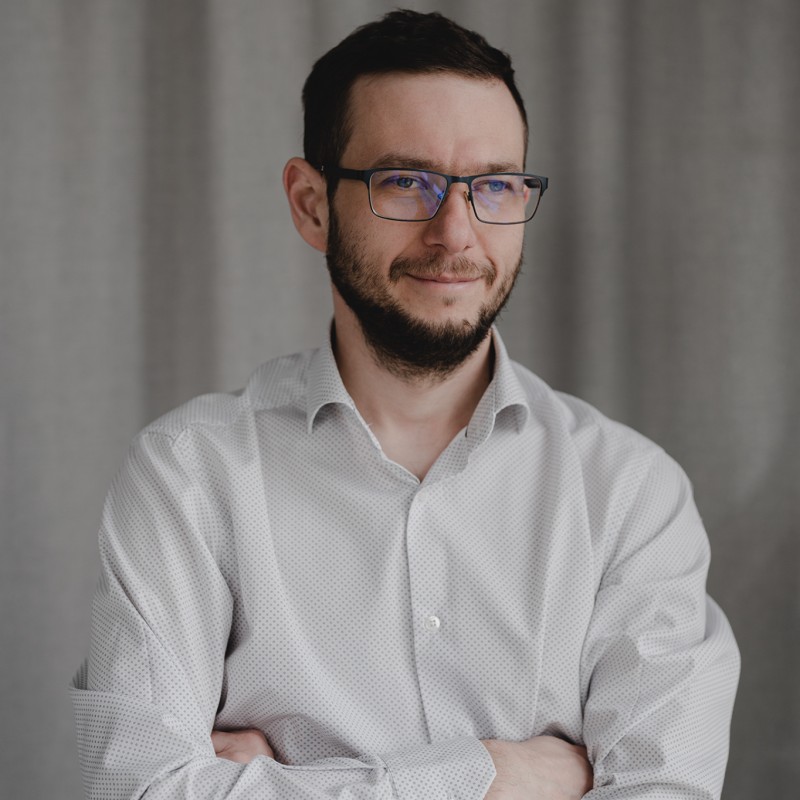
Michał Karbowiak
Journalist and business specialist covering stories that often escape the global media. Connecting Polish innovation with a global perspective.
LinkedIn

