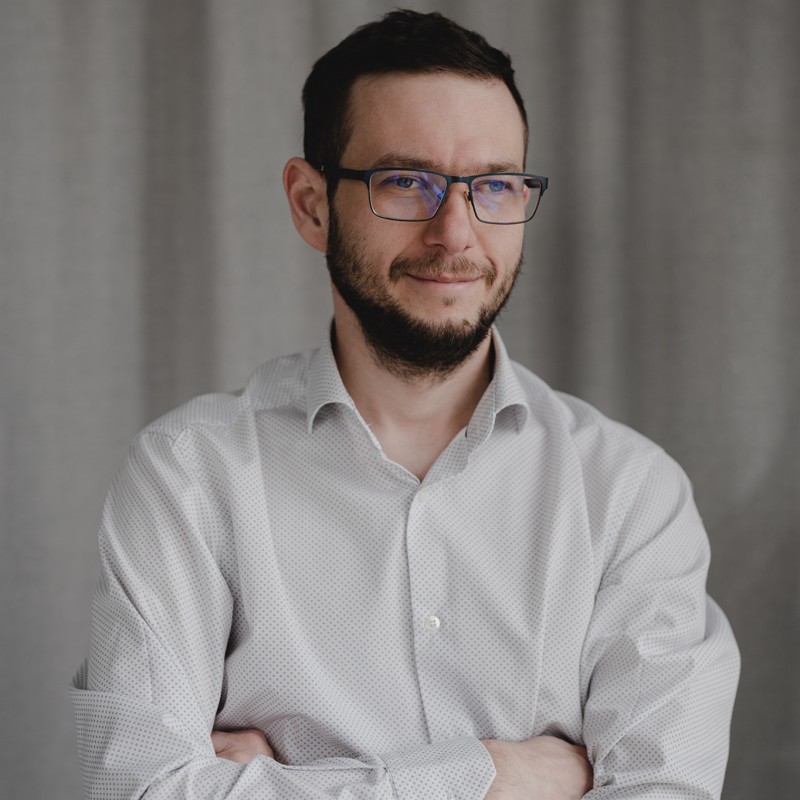

Quick Highlights:
- Who is Luke Nosek? Born Łukasz Nosek in Tarnów, Poland, he is a PayPal co-founder, venture capitalist, key individual shareholder in SpaceX, and a close ally of Elon Musk.
- SpaceX IPO: Following SpaceX's historic IPO ($2.1 trillion market cap), Luke Nosek’s stake surpassed $6 billion USD (~22B PLN), placing him among the top wealthiest Poles in 2026 according to Wprost weekly.
- Family Background: He emigrated to the US in 1978 with his parents, Roman Nosek and Danuta Nosek.
Luke Nosek is the second-largest individual shareholder in SpaceX, trailing only Elon Musk.
The gap between them is vast. Musk - the company's founder and CEO - holds a 42% stake. Nosek, the first venture capitalist to back the company, owns 0.29% of the shares (0.22% personally and 0.07% through Nosek Capital).
Although his stake might seem microscopic, it translated into a fortune after the IPO. SpaceX reached a market capitalization of $2.1 trillion by the end of its first day of trading, meaning Nosek's shares were worth over $6 billion. This, in turn, equates to more than 22 billion PLN - a fortune that puts him among the top wealthiest Poles, with Wprost weekly even placing him right at the very top of their list.
For him, of course, that milestone is secondary. The PayPal co-founder and SpaceX investor maintains a much deeper connection to Poland than it might seem. He has met with high-ranking Polish politicians (including President Andrzej Duda), visits the country quite regularly, and maintains close ties with American businessmen of Polish descent.
Not long ago, he even attempted to launch a major business venture there.
Where Was Luke Nosek Born? (Łukasz Nosek Family Roots)
He was born on June 29, 1975, in Tarnów, Poland, as Łukasz Nosek - the son of Danuta and Roman Nosek. He was delivered at what locals call the "old" hospital on Szpitalna Street.
This hospital detail may seem minor, but it is a crucial point of clarification. Many media profiles, as well as President Duda's biographical book, state that Nosek hails from Zgłobice, a village just outside Tarnów. In reality, he never lived there and has no ties to the location. How Zgłobice ended up in the Polish Wikipedia entry years ago remains a mystery.
In 2019, I began tracing Nosek's Polish roots and tracking his career, starting specifically with verifying his place of birth. My investigation yielded a rather amusing email from the parish in Zgłobice.
"No such individual appears in our parish registries. Best regards, the Parish Priest."
Later, I spoke with Luke's cousins, as well as his father's sister, Lidia Gładysz, and her husband Janusz Gładysz, a prominent automotive entrepreneur in Tarnów. I compiled these findings into a widely cited feature article for the Polish edition of Newsweek.
Where Did Luke Nosek Grow Up?
Much of the information gathered during that trip never made it into the Newsweek piece due to print layout limitations. For instance, Janusz Gładysz took me to 4 Parkowa Street, where Łukasz grew up - a two-room apartment on the fourth floor of a low-rise concrete residential block.
I also spoke with Tadeusz Nosek, the owner of the iconic Bristol Hotel in the heart of Tarnów. The location is legendary; its restaurant has operated continuously since 1906, and in the 1920s the building served as a refuge for the exiled government of the Ukrainian People's Republic, led by Symon Petliura.
Tadeusz Nosek, though unrelated to Łukasz Nosek, claimed to have known his grandfather. Kazimierz Nosek reportedly worked as the service manager at the restaurant during the communist era, a venue frequented by crowds of Tarnów residents.
"I remember Kazimierz - tall, smiling, and a bit stout," recalled Tadeusz Nosek, who started at the Bristol Restaurant in the 1970s as a junior waiter. "I never met Łukasz. I didn't even know someone so well-known in the business world came from our region. As for the family lineage, it likely originates from present-day Ukraine. The Polish branch of the Noseks mostly hails from the Dunajec River region."
From Łukasz to Luke Nosek
Over the years, a few more details have emerged regarding the Nosek family's departure for the US in 1978.
Luke Nosek recalled that his parents used a clever ruse. They told friends they were heading to Austria for a skiing trip, while secretly preparing to emigrate permanently. They liquidated whatever assets they could, including their Fiat 125p - a prized possession in communist Poland. Nosek joked that the cash went toward bribing a communist official.
They entered Austria on a tourist visa and boarded a flight to the United States that very same day.
The destination was no accident; Łukasz's maternal grandmother was already waiting for them in the US. While the Noseks had a place to start, life was initially difficult for the immigrant family.
They lived in a cramped apartment in an immigrant neighborhood in Chicago. Roman worked grueling hours, often at night. During the day, he helped Danuta raise the children: first Łukasz, and later his sister Laura, who was born shortly after their arrival in the US.
Over time, the family's financial situation improved. Roman Nosek went on to work in the design office of a nuclear power plant and eventually launched his own trucking company. Danuta stayed home after Laura was born but later built a career as a chemist at Castrol.
Luke Nosek: The Rebel
Luke Nosek inherited his analytical mind and curiosity for science from his mother. According to his relatives, those instincts let him consistently outperform his peers in the classroom.
He took apart computers before he was old enough to drive, and that fascination pushed him toward computer engineering at the University of Illinois at Urbana–Champaign (UIUC). He disliked school as an institution, though, and chose UIUC simply because the application form was short. By the end of his freshman year, he was already looking for ways to bypass standard classes.
He preferred practical creation and experimentation. This drive led him to the Association for Computing Machinery (ACM), where he met his future PayPal co-founder Max Levchin, a fellow immigrant from Ukraine. They first crossed paths one evening in a computer lab where Levchin was coding an "explosion simulator." Levchin couldn't quite explain why he was building it; it was pure passion.
"ACM was this anti-educational group of rebels," Nosek recalled in Jimmy Soni's book The Founders.
He was particularly proud of an experiment where he and his friends hooked up a soda vending machine to the Internet - an early iteration of what we now call the Internet of Things.
"It took so long that we probably could have built eBay in that time," Nosek laughed.
The Failures of Luke Nosek
Although Nosek, Levchin, and their mutual friend Scott Banister would eventually build the powerhouse that became PayPal, their very first joint venture collapsed.
SponsorNet New Media was an early digital advertising network for websites. The project generated enough revenue for them to rent an office, but it folded after a year when they ran out of money to keep the servers running. The founders struggled to scale sales or secure venture capital, ultimately exhausting their savings. However, the experience proved invaluable: they built a product, hired a team, and acquired their first clients.
"Without it, PayPal wouldn't exist," Luke Nosek stated in The Founders.
His next failure occurred in Silicon Valley. Having followed Banister out west, Nosek couch-surfed and attended the parties of the rapidly multiplying dot-coms. This networking landed him a job at Netscape, the company behind the era's dominant web browser. He was let go after a year because, as he put it, he "did nothing there."
Nosek then founded a startup called Smart Calendar and convinced his acquaintance Peter Thiel - an immigrant from Germany - to invest. The two had met shortly before during a debate and began meeting regularly at Hobee's, a Palo Alto diner, playfully dubbing their gatherings the "breakfast billionaire's club." They debated the future, technology, and business.
The problem was that Nosek's startup was a bust. The Polish-American entrepreneur clashed with his co-founder, was pushed out of the company, and Thiel lost his $100,000 investment.
Instead of holding a grudge, Thiel used the experience to refine his investment thesis. In future ventures, he placed immense weight on the founding team, the critical nature of the problem being solved, and market saturation (there were already roughly 200 electronic calendars on the market at the time). This lesson sharpened Thiel's instincts; he went on to become an early backer of SpaceX, Airbnb, Facebook, and Spotify.
Luke Nosek and PayPal
In a separate turn of events in Silicon Valley, Thiel met Max Levchin, Nosek's college classmate. In 1998, they co-founded Confinity.
Initially, the company focused on mobile payments transmitted between personal digital assistants (like the PalmPilot). It later shifted to transferring money via email, ultimately evolving into the PayPal payment ecosystem. Following a merger in 2000 with Elon Musk's X.com, the combined entity adopted the PayPal name, went public in 2002, and was acquired shortly thereafter by eBay for $1.5 billion.
While this chapter of tech history is thoroughly documented in books (most notably The Founders) and countless media publications, Nosek's early role is worth highlighting.
He was part of the team almost from day one, even though he initially found Levchin's original idea of securing PalmPilots boring. He committed to the project purely because of the people involved.
"Something told me that together we would achieve something extraordinary," he noted in The Founders.
His exact role at the company was initially undefined, but he eventually took charge of sales and marketing. In the book, Max Levchin characterized Nosek's unique intuition:
"Luke was one of those people who just walks around and stumbles into great ideas. He somehow had a knack for spotting them. He would suggest something, and we'd say, 'That's crazy.' And then it would turn out to be a genuinely brilliant move."
Nosek implemented a viral referral program where new PayPal users received $10 just for signing up, could send $10 to a friend, and would receive an additional $10 once that friend registered.
To the finance team, "giving away" money in this manner seemed absurd. However, user growth exploded, altering the underlying economics: while traditional banks paid roughly $200 to acquire a customer, PayPal was acquiring them for $30.
Nosek and Banister are also credited as the creators of Instant Transfer - the mechanism allowing users to immediately send funds or make payments via PayPal.
Luke Nosek and Elon Musk
In light of SpaceX's public debut and Nosek's decades-long partnership with Elon Musk, it is a humorous historical irony that Nosek participated in the corporate coup against Musk in 2000.
A faction of executives decided to oust Musk from his role as PayPal CEO while he was away on his honeymoon. The "conspirators" held secret meetings at Nosek's apartment at 469 Grant Avenue in Palo Alto. Their maneuvers ultimately resulted in Thiel replacing Musk at the helm of the company.
Years later, the SpaceX founder recalled the incident with humor: "Sneaky, treacherous bastards. They didn't have the courage to stab me in the front."
Of all the members of the legendary "PayPal Mafia," Nosek has remained closest to Musk. The two share a tight personal friendship and deep business ties.
Luke backed Elon's ventures first through Founders Fund (which he co-founded with Thiel) and later through his own venture firm, Gigafund. Since 2017, Gigafund has poured over $1 billion into the development of SpaceX.
"In 2008, Luke Nosek became the first venture capitalist to back SpaceX, and he has served on the company's board of directors ever since," notes the Gigafund website.
What united them was non-linear thinking. When Musk declared that his life's mission was to "make humanity an interplanetary civilization," other acquaintances told him he had lost his mind. Nosek, meanwhile, maintains that the success of SpaceX is "critical from the perspective of the human race."
Luke Nosek and Poland
Does the billionaire Luke Nosek feel connected to Poland, and is he willing to invest in the country?
If he does, it will likely be driven strictly by business metrics rather than emotional sentiment. Strategic return on investment will trump nostalgia.
This pragmatism was evident during Nosek's only major public appearance in Poland. In 2022, he attended the Congress 590 economic forum in Rzeszów, took the main stage, and granted a brief interview in Polish.
His presence was strategic: a company he had invested in, Last Energy, was attempting to deploy micro-nuclear reactors in the country. Nosek used his global stature to lend credibility to the venture and bolster its chances of regulatory success.
He discussed nuclear energy infrastructure directly with President Andrzej Duda. Subsequently, Last Energy signed a letter of intent with the state-controlled energy giant Enea Group, as well as two Special Economic Zones.
However, the venture stalled. The letter of intent with Enea expired, and Last Energy no longer maintains an active operational footprint in Poland. Nosek was deeply disappointed by how the situation unfolded.
For now, Poland is not his primary focus. Media reports suggest that he and Elon Musk are working together on projects with global scale - Musk has signaled a return to financial tech, where Nosek could play a pivotal role.
It would mark a spectacular full-circle return. Despite his immense business success, the Polish-born PayPal co-founder walked away from that era feeling somewhat unfulfilled.
"If it was a revolution, why did we sell it for cash?"
Sources
- Jimmy Soni, The Founders: The Story of PayPal and the Entrepreneurs Who Shaped Silicon Valley (Simon & Schuster).
- Andrzej Duda, To ja. Andrzej Duda (Videre Sp. z o.o.).
- Łukasz Nosek z Doliny Krzemowej. Kim jest Polak, który chce wysłać ludzi na Marsa?, Newsweek Polska.
- Wyrośnie na jednego z najbogatszych Polaków? To przyjaciel Elona Muska, Money.pl.
- Polak może pokierować rewolucyjnym projektem Elona Muska. Nadchodzi X Money, Gazeta.pl.
- Last Energy wycofało wniosek dotyczący wydania decyzji zasadniczej, Nuclear.pl.
- Największy debiut w historii. Nadzieje inwestorów – SpaceX lecą w kosmos, Money.pl.
*Edited after the SpaceX IPO to reflect the actual valuation.


