
Key facts
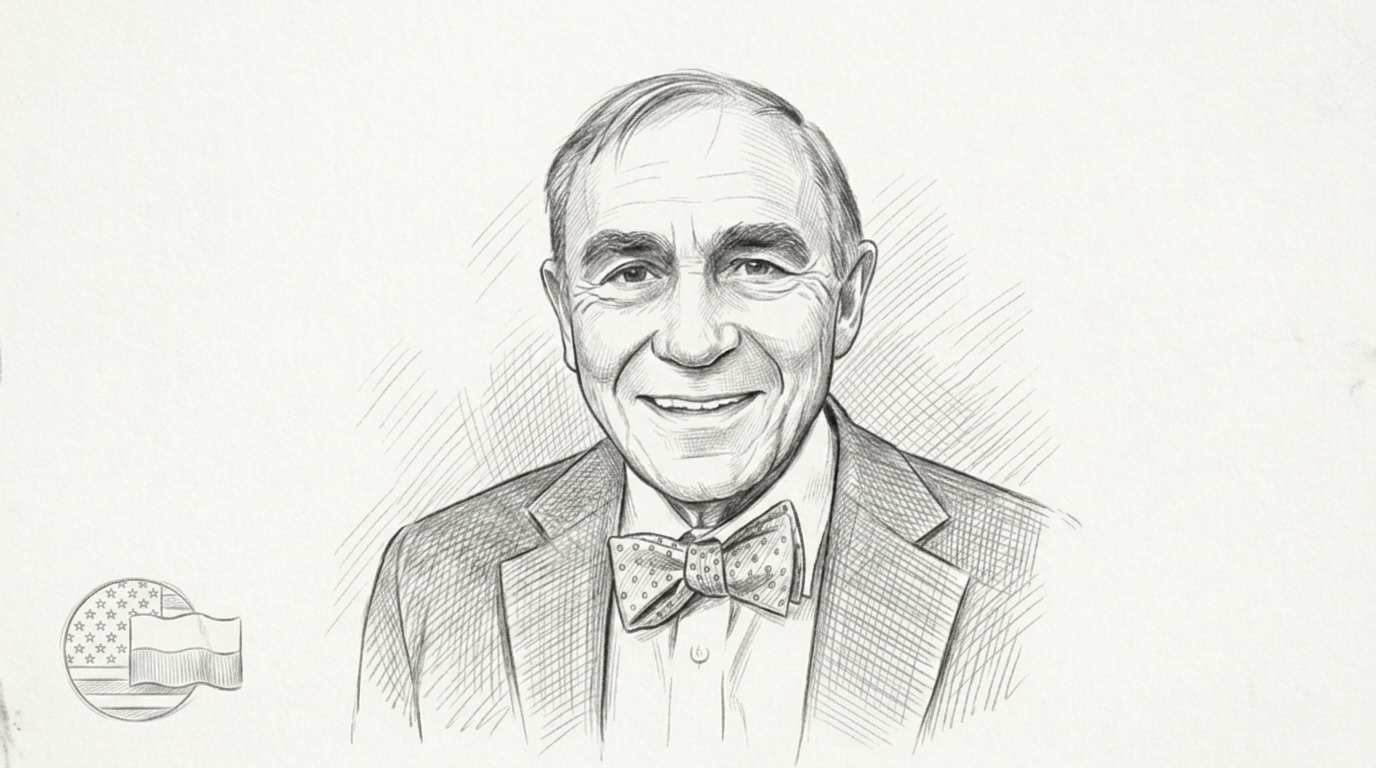
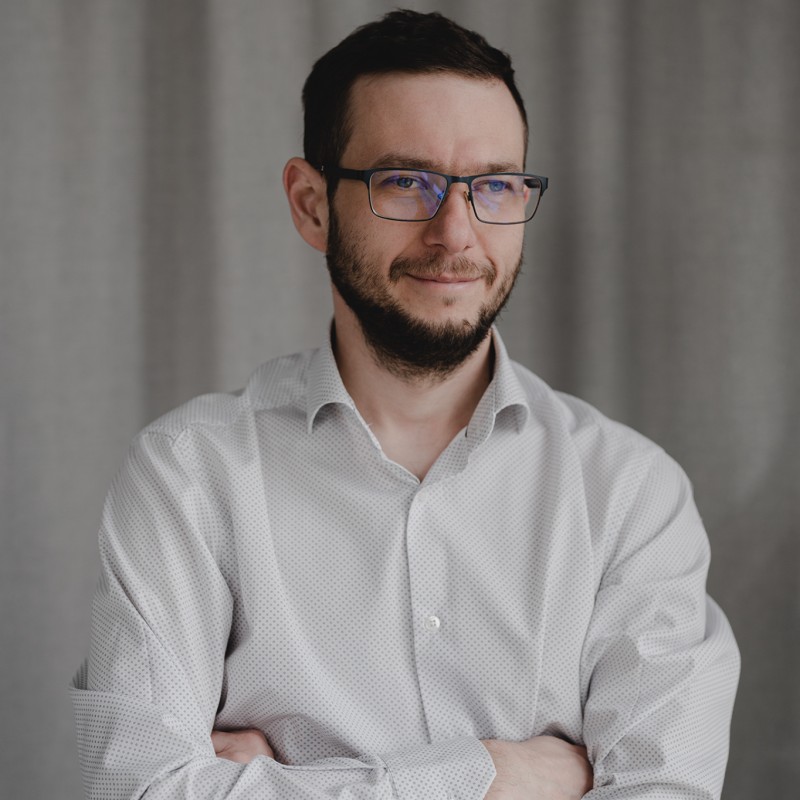
- Who is Marcin Żukowski? Born in 1977 in Białystok, a graduate of the University of Warsaw, he defended his PhD at VU Amsterdam.
- Scientist and entrepreneur: based on his doctoral work, together with his friend Peter Boncz he founded Vectorwise.
- Snowflake founder: he later co-founded Snowflake with Benoît Dageville and Thierry Cruanes – a cloud database giant with a market capitalization of around $100 billion.
- Investing in Poland: after leaving Snowflake he invests in Polish companies and supports the startup ecosystem.
Michał Karbowiak: How do you define yourself these days?
Marcin Żukowski: As a retired man. Well, maybe semi-retired (laughs).
The co-founder of Snowflake - a company with a market cap of over $100 billion and a giant in cloud databases - is sitting in warm slippers by the fireplace?
Not quite (laughs). I'm not employed anywhere, but I do a lot of things. I have non-commercial software projects. I spend a lot of time investing in and supporting the Polish startup ecosystem. I'm involved in family life, I have my hobbies…
That's quite a lot for a retiree. What tech projects are you working on?
Recently, I came up with a new data compression technique. Maybe not entirely new, but one that offers a significant speedup to an existing process. I did it somewhat accidentally, and it turned out to be a mini-revolution. At least that's what experts in the field say, because I don't know much about it myself.
A mini-revolution in data compression
You don't know much about it, and you accidentally created a revolution?!
My brain works in strange ways; it generates a lot of ideas. Maybe it's even a little… crazy. I found a quote from John Nash, who said he wouldn't have come up with what he did if his brain worked "normally."
Nash is the main character in the movie "A Beautiful Mind." He was a brilliant mathematician, a Nobel Laureate, and… suffered from schizophrenia.
I guess I just function differently than most people. I work a lot with ideas, thinking about what interesting things could be done. Right now is a wonderful time because I can bounce these ideas off artificial intelligence en masse. Some I abandon immediately; others I analyze more deeply. And then I pick the next problem to solve.
In the case of data compression, three months ago I published an article on how a certain key process could be run much faster. Thanks to this, new generations of software similar to the popular ZIP would have significantly better performance, and certain limitations would disappear.
Several people and projects in the industry picked up on my idea, and we are working together on the next steps.
Are you laying the groundwork for another multi-billion-dollar company?
No, you can't make money on this. We are doing it in open source, without patents. It is absolutely not a business idea. I'll probably work on it intensively for a few months and then jump to something else.
Just like that?
I'm in a position where I can afford to do that. I want to help people who are pushing the world forward, rather than getting stuck in one specific project for years.
Investing in Polish companies
Is investing in Polish companies and startups your way of "pushing the world forward"?
It's helping to make a change. In Poland, there are many people doing interesting things, but we still lack the appropriate critical mass. I would love to change that. Among others, I invested in Jarek Królewski's company, Synerise, which develops advanced solutions in artificial intelligence, data analytics, and process and marketing automation. I love Nomagic, which produces robots for comprehensive warehouse automation. Marek Cygan, one of Nomagic's co-founders, recently launched a new project called Sentinel Eagle, where AI-based modules and neural networks are used in drone systems. These are just examples. There are far more interesting projects and smart people in Poland.
Why haven't we been able to achieve that critical mass: a number of global companies that would turn our country into a globally visible, self-sustaining ecosystem?
Many things are still missing. Capital is lacking - capital that provides something more than just money. And at the same time, capital that doesn't carry strange restrictions characteristic of government or European funds, without generating massive red tape and absurd requirements. One of the companies I invested in collapsed because its funding was suddenly withdrawn from the Polish Development Fund (PFR) pool…
At the same time, the Polish venture capital market is largely based on public funding. Without it, things would be much worse.
That's another problem. There are still very few solid, private VCs. One can also get the impression that public money goes to a lot of average-quality projects. As if it weren't about building great companies, but simply about spending the money.
As an investor, what do you bring to companies besides capital?
Experience in building a global business. But I don't know if I'm a "game changer" for these companies. And that's not out of exceptional modesty. The point is, when you start investing, you think you'll work with the founders individually, help them during key moments, etc. But then the number of companies grows, they come from different industries - which you don't always know well - and you're doing other things besides investing. Sometimes I feel it ends up being high-level advice. Necessary, probably, but I don't know if it fundamentally changes the daily reality of a given company.
What kind of advice is that?
I advise Polish companies to start selling internationally as soon as possible because our domestic market is a trap. It's mid-sized - if we focus on it, we will either grow too slowly, develop technology too late relative to global competition, or - after achieving relative success - we simply won't feel like fighting on a larger arena anymore.
To founders with a technical background, I advise that they start appreciating the non-technical aspects of running a company. I remind them that technology is not yet a product, even if it has many applications. The customer must know what specific problems they can solve with it, how to use it, and they must want to pay for it. I know this because I made those exact mistakes when building my first company.
Meaning?
I focused on technology rather than the product, and I left sales to someone else. On the other hand, if I had done everything right back then, maybe I wouldn't have sold that company, wouldn't have left, and wouldn't have later co-founded Snowflake. No point in complaining.
Białystok, root causes, and the University of Warsaw exam
We'll get to Snowflake. But in Marcin Żukowski's story, I miss the roots the most. So much has been written about you, yet on the internet, there isn't even information on what year you were born.
In 1977, in Białystok. I lived like most kids back then. I lived in a block of flats, played football, climbed trees. When I was maybe 9 years old, a local policeman handcuffed me because I was walking on the roof of his apartment (laughs). But I wasn't a troublemaker; I studied at a music school, played the violin and the accordion. I quit when they told me I had to practice four hours a day to succeed. I preferred playing football.
Computers?
I got my first computer in fourth or fifth grade - an Atari 800XL. Before that, starting in second grade, I used to travel to a friend who already had his own equipment just to play games.
I got hooked on programming and the demoscene. It was a subculture where people created programs and then met up to present them. I would grab a monitor, floppy disks, pack my computer into an Alpinus backpack, and take off to see what others were doing - sometimes on the other side of the country.
The demoscene was all about graphics, music, and visual effects. Members of that community wanted to squeeze as much power out of those early computers as possible.
In a way, that shaped me, because later in all my projects, I focused on optimization - I wanted software to run fast and efficiently.
Did you get into Computer Science at the University of Warsaw without any problems?
I didn't get in at all.
How so?
On my first attempt, I was short by 1 or 2 points. For a year, I studied at the Białystok University of Technology. But I have a good excuse for why that exam went wrong.
I'd love to hear it.
We arrived from Białystok the day before the exam. A friend and I ate something at KFC, and near the Rotunda in Warsaw, three guys with knives mugged us. They didn't beat us up, but they took everything we had: money, Walkmans…
A trauma.
To this day, I remember one of them saying: "Don't go to the police, or we'll kill you." And do you know what we did? We went to the police.
Who surely didn't catch the perpetrators.
They did! We went with plainclothes officers back to the spot, and it turned out that 100 meters away, two of those thieves were drinking beer. They caught them, but we spent the entire day before the exam at the police station. Including a lineup where we stood facing those men, without any one-way mirror, to confirm they were the ones who mugged us.
A bit different than in the movies.
Definitely. At the station, we watched a football match, I think as part of the European Championship, and at night, the police drove us to a convent boarding home for young girls, where we slept. The Mother Superior told us: "Boys, you were so lucky. At the hospital in Praga where I work, they bring in people cut up with knives all the time, and nothing happened to you."
No wonder the exam didn't go well.
Right? It set off a whole chain of events. Because I entered the University of Warsaw a year later than planned, I managed to catch the inaugural edition of a student exchange program with VU University Amsterdam, where I defended my master's thesis in parallel.
Are you saying that if it hadn't been for the mugging near the Rotunda, you might not have gone to the Netherlands, written your PhD there, and consequently not co-founded Snowflake in the US?
Exactly. Notice what a massive role chance plays in life. And how little we talk about it.
I think if I had stayed in Poland back then and not left for the Netherlands, I wouldn't have achieved what I did. There were more coincidences, by the way.
Perhaps less dramatic ones?
While still at the University of Warsaw, I didn't get into my dream master's seminar on distributed systems. I went with databases instead. At VU in Amsterdam, it turned out they didn't really specialize in databases. But there was a research institute - Centrum Wiskunde & Informatica - specialized in that field. There, they convinced me not to analyze theoretical problems - as I originally wanted - but to do something practical. I was assigned to a young PhD student, Peter Boncz. Peter advised my master's thesis, my PhD, and later became a partner in my first company, Vectorwise. We remain friends to this day.
PhD and Vectorwise
If you had gotten into the distributed systems seminar at UW, you might never have met him.
My life would look different. I might not have written the PhD thesis that allowed me to found Vectorwise and years later also drew the interest of the co-founders of Snowflake.
What was your doctoral dissertation about?
Imagine you have a system that processes data - which essentially boils down to a series of operations. For example: "check if Michał's age is greater than 40, and if it is, multiply by 1.2 and calculate the bonus he is entitled to." Until then, all systems worked by taking one record, executing one operation, and only then moving to the next. It's a bit like going to the store before a party with a crowd of guests to buy one beer for each person individually.
This is getting interesting.
So you have 50 guests, but instead of buying a few cases of beer, you go for each bottle one by one, executing the same operation repeatedly. You pull a bottle off the shelf, go to the register, bring it home from the shop, and place it on a shelf in the fridge.
A waste of time.
A very inefficient process. Elegant, because you aren't lugging several cases, just one bottle, but inefficient. Databases were somewhat similar: an elegant model existed, but it operated slowly. I figured out how to operate on a thousand pieces of data at once - performing one operation on them first, and then the next.
This required technological innovation, but it made the system capable of running 5 to 10 times faster than anything else on the market. Based on that PhD, Peter and I founded a company.
Sounds like a candidate for a unicorn - a company that would quickly reach a valuation of at least a billion dollars.
Honestly? We didn't want to start that company. Initially, we intended to sell the technology to someone else. We weren't entrepreneurs; we were scientists, without experience. You could say reality somewhat forced us to start a company.
Why?
Because nobody wanted to buy the technology. We showed it to Microsoft, I think also to Google and Oracle, but remember, that was 2008. Back then, business connections between Europe and the US were much weaker than today. We lacked contacts and the knowledge of how to talk to those corporations. So, we had to start a company.
It still seems like it had massive potential.
It did, but we made every possible mistake back then that I briefly mentioned earlier. We had technology, but we didn't know how to build a good product out of it. We didn't know how to sell. Ultimately, in 2010, the company was acquired by the American company Ingres Corp. - now Actian. I worked there for almost two more years.
Was that a success or a failure?
A business failure, because we couldn't capitalize on the technology's potential. At the same time, we set technological standards in the industry. That was our success.
The co-founder who said no to Snowflake
Is it true that you initially didn't want to be a founder of Snowflake?
In the beginning, I told my future partners, Benoît Dageville and Thierry Cruanes, that I wouldn't join them. A headhunter I respected very much put us in touch. The offer to join Snowflake arrived precisely when I was leaving my previous company. "Precisely" is an exact term: I received an email asking if I happened to be traveling from Amsterdam to Silicon Valley, and I could reply, "Yes, I'll be there tomorrow," because I was flying to my employer at the time.
Another coincidence.
If I had received that email two weeks earlier or two weeks later, the meeting probably wouldn't have happened…
Yet at first, you turned down your future partners.
The conversation was very good; we liked each other and understood each other. But my mind was elsewhere: I didn't fully know if I wanted to leave my previous company. At the same time, I felt burned out - I wanted to take a longer break from work.
Ultimately, during my stay in the US, I announced that I was leaving. A few days later, the Snowflake partners reached out again. That's when it clicked.
I decided to move to Silicon Valley, especially since my partner also received a job offer there.
Creating and developing Snowflake still took considerable courage. In 2013, Hadoop was considered to have much better odds.
There were people who said, "Why are you doing this? Everyone is going to use Hadoop." However, I was skeptical about Hadoop from a technical standpoint. Although I didn't know much about the cloud where Snowflake was supposed to operate, I quickly made sure that it would work.
It might sound a bit strange, but I wrote in an article that although Snowflake's architecture was groundbreaking, it was also inevitable.
What does that mean?
It means that starting from basic engineering principles and following a proper reasoning process, you should end up with that or very similar architecture. On the principle that: if we want the cheapest possible method of storing data in the cloud, we must use this layer. This layer has such and such characteristics, so the way we store this data must have such and such characteristics. And so on, and so forth. A sequence of, in a sense, inevitable elements.
When building Snowflake, did you have a blueprint in mind that reduced uncertainty?
We knew how we wanted to build it, and we were confident we could build it well. The cloud offered fantastic possibilities to customers.
Such as?
The cloud allows the customer to be completely detached from infrastructure problems - there's no need to buy computers or physical hardware. Additionally, it's quite easy to manage. It gives unprecedented flexibility in accessing computing resources - the user can draw exactly the amount of power they need, when they need it. And they pay for what they consume. What's wonderful is that all cloud users operate within the same single platform. As a result, traditional technological and physical barriers disappear, such as the need to copy data onto disks or time-consuming transfers.
Theoretically, many companies could have taken advantage of those possibilities. Why did you succeed?
We had advanced technical knowledge, but also the ability to translate technology into a product. My co-founders, Benoît and Thierry, played a huge role here because they had not only PhDs in databases earned in France, but also years of experience at Oracle, where they held key positions. Above all, they understood customer needs.
Give an example.
We placed a heavy emphasis on ease of use. For instance, we did away with the ability to configure hundreds of complex parameters. Historically, databases were famous for that. But it created problems for both users and the company.
In the event of an error, just making sense of that "fog" took a lot of time. Our method was vastly more efficient, and customers appreciated that.
Snowflake, IPO, and fuck you money
What does it feel like to take a company public on the New York Stock Exchange? Snowflake debuted on September 16, 2020, at a valuation of around $70 billion, which was the highest software IPO debut in history at the time.
It's an interesting experience. However, on the day of the debut itself, my life didn't change. I had sold some of my shares earlier through secondaries. So I already had my "fuck you money" (laughs). I knew I didn't have to worry about finances for the rest of my life.
I took the greatest satisfaction in watching lives change for others - those who worked hard, took risks, and dedicated a huge amount of time to Snowflake. On that day, several hundred people in our company made at least a million dollars.
Did you throw a party, get drunk with joy?
We threw a party spontaneously in the afternoon because the debut itself took place around 6:30 AM California time, and during COVID times. Every year, one person from our team organizes a gathering for former Snowflake employees to commemorate the event. It's nice to see everyone then because many are doing something different now. I remember two people even got tattoos to mark the IPO.
And you?
Like everyone, I got a mug, a t-shirt, and I have a trophy from that day. It features the company logo, the date of the debut, and the NYSE building. It sits on a special shelf in my apartment.
A shelf of glory?
There are a few things there that I'm proud of. But the IPO memento isn't the most important. For example, there are signatures from team members from the day we launched the first official version of Snowflake. Or awards from my institute and academic conferences.
You've probably collected quite a few.
Two are particularly important. They are "Test of Time Awards" from key academic conferences in our industry. They are awarded to papers that - as we would say - stood the test of time. Meaning they held up on merit over 20 years, for example.
I have one for a paper related to my first company's technology, and another–quite recent–for Snowflake.
You are a visionary, a genius.
Genius is someone like Tomek Czajka (an outstanding Polish programmer who worked at Google and SpaceX, among others – ed. note) or Piotrek Sankowski (director of the IDEAS research institute – ed. note). I don't see myself that way at all. Truly. I met far more exceptional people at the University of Warsaw, not to mention Silicon Valley.
There is such a concentration of talent here that it's hard to even imagine. You can meet brilliant software engineers or - pardon the expression - kick-ass product managers, sales experts, or executives. The best in the world. Incredible people in every possible field.
And you among them. That modesty isn't necessary.
My wife says I am "the most arrogant, insecure guy she knows" (laughs). There are people who far surpassed me intellectually. Maybe I had a bit more creativity, maybe openness, maybe social skills like that. I'm decent at technical things, diagnosing what doesn't work, and improving processes. I try to create a good atmosphere and I know how to hire good people.
That's almost the essence of being a great boss.
Maybe. But I've truly seen exceptional individuals, and I've worked with many. It gives you proper humility.
Heading toward Poland
Why did you leave Snowflake?
A lot of factors contributed to that. I was already very tired, even burned out. As I mentioned, I wanted to take a break from work even before Snowflake. And yet afterwards, there were moments when I worked 70 hours a week or more. I also think I was less comfortable in a large organization employing several thousand people. I had never worked in a company that size before.
But it was your company–you could have arranged many things according to your preferences.
With an organization that large, it's no longer entirely up to you. Political issues start playing a role: you have to know how to position yourself regarding a given problem in the company. There are tons of people, processes, interests - sometimes conflicting ones. It wasn't really my world anymore…
Our children were born, I took paternity leave, I saw that I wasn't indispensable in the company, and that I could live a bit differently. Gradually, I began scaling down my activity.
What connects you to Snowflake today?
I still hold a lot of shares and know some people there. I'm rooting for everyone.
Was entering Poland in 2021 a decision by the Polish co-founder?
It was a company decision. Maybe I aimed the binoculars at Poland in some way, because during COVID my family and I considered returning to the country. The situation in the US was terrible, much better in Poland. Then it got worse in Poland, improved in the US, and ultimately we stayed. Execution-wise, Grzegorz Czajkowski did the biggest job. He advised us on which company to acquire in Poland, piloted the process, and thanks to that, Snowflake opened an office in Warsaw.
Was there any of your patriotic sentiment toward Poland in that company decision?
I'll tell you honestly: if you are a co-founder of a company working at the executive level, you shouldn't even do such things. Your duty is to focus and optimize all efforts for the good of the company.
We decided to enter Poland because we knew there was a wealth of talent here. And that it was beneficial for Snowflake. Business-wise, Poland was third-tier for us due to market size. The first tier is the US, the second is large Western European markets, and the third is Poland and many other countries. Maybe Japan is somewhere in between.
From a Polish perspective, that's a bit sad.
First, things have probably changed a bit since then. Second, it depends on the type of business. We were building a highly technological B2B business; our largest clients were in other markets. Third, Poland can still boast an impressive pool of talent. We should be glad about that and do everything to translate it into greater business success for Polish companies.
What can be done to better attract Polish founders of billion-dollar companies operating in the US to our ecosystem? Recently on Polish Tech Minds, I shared a list based on data from the National Foundation for American Policy showing there are at least nine of them.
I saw that list; I know some of those people. It is a highly private and individual matter. I think every entrepreneur first and foremost looks at the success of the company they lead. Once they achieve it, they think about what's next, more as a private individual. They might want to get involved in the ecosystem, invest. But that's their personal decision.
Can the Polish government do something to facilitate that?
The government? In my opinion, first and foremost, it can refrain from getting in the way. It can simplify regulations and ensure transparency and stability for entrepreneurs.
And what can the Polish startup community do, if it cares about people like you investing in Poland?
You don't need to worry about me (laughs). Other people will do as they feel. Let's allow them to do so without creating expectations or mandatory patterns to follow. Entrepreneurs are human beings, too. Everyone is different.